
Discover, explore and download thousands of ebooks across multiple subjects.

Discover, explore and download thousands of ebooks across multiple subjects.
ISBN : 9798904755706
Year : 2026 Price : $ 262.50
Thomas Rousseau is a culinary futurist, food scientist, and molecular gastronomist whose pioneering work at the intersection of traditional culinary arts and cutting-edge engineering has redefined modern cuisine. With a career spanning over two decades in both Michelin-starred kitchens and advanced thermal physics laboratories, Rousseau has established himself as the industry’s leading authority on the mechanisation and chemistry of flavor development. He holds a PhD in Food Science and Biosystems Engineering from the École Polytechnique Fédérale de Lausanne (EPFL), where his doctoral thesis on The Kinetics of Lipid Phase Transitions under High-Pressure Thermal Processing won the prestigious European Food Engineering Award. Prior to his academic tenure, Rousseau completed his classical culinary training at Le Cordon Bleu in Paris, graduating at the top of his class before apprenticing under legendary avant-garde chefs across Europe and Asia. Rousseau’s unique professional duality bridges the gap between the artistic intuition of the chef and the rigorous precision of the scientist. As the founder and Director of the Rousseau Institute for Gastronomic Innovation in Lyon, France, he leads a multidisciplinary team of engineers, software developers, and culinarians dedicated to developing next-generation kitchen technology. His laboratory's breakthroughs in ultrasonic emulsification, precise algorithmic sous-vide convection, and automated hyper-baric extraction have been adopted by manufacturing giants and elite commercial kitchens worldwide. A frequent keynote speaker at global technology summits and culinary symposia alike, his research has been published in The Journal of Food Engineering and featured in Nature.
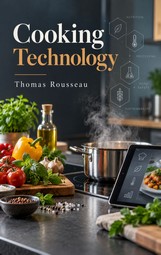
New scientific discoveries, technologies and techniques often find their way into the space and equipment of domestic and professional kitchens. Using approaches based on anthropology, archaeology and history, Cooking Technology reveals the impact these and the associated broader socio-cultural, political and economic changes have on everyday culinary practices, explaining why people transform or, indeed, refuse to change their kitchens and food habits. Cooking Technology is a groundbreaking exploration of how the tools we use to heat, preserve, and prepare our food have fundamentally reshaped human civilization. Rather than a simple history of kitchen appliances, this book presents a powerful thesis: technology is the hidden engine driving culinary culture, dictating not only what we eat, but how we live, interact, and think. From the control of fire to the precision of modern immersion circulators, the narrative traces how technological leaps have consistently democratized flavor and redefined the boundaries of human taste. It is an essential read for food historians, culinary professionals, and anyone curious about the unseen forces shaping the modern plate. The shift from open-flame cooking to enclosed cast-iron stoves, and how the introduction of electricity shifted the kitchen from a place of labor to a hub of domestic innovation. A deep dive into the dual revolutions of refrigeration and canning, which severed agriculture from the constraints of geography and season. An analysis of artificial intelligence, automated cooking, and sustainable protein synthesis, mapping out how technology will solve the looming global food crisis.
Preface
Chapter 1. Introduction to Cooking Technology
Defining Cooking Technology: From Primitive Fire to Smart Kitchens
Brief History of Culinary Innovation: Milestones that Changed how we Eat
Principles: How Heat Transforms Food
Classification of Cooking Methods: Dry Heat, Moist Heat, and Modern Techniques
Modern Kitchen Ecosystem: An Overview of Key Appliances
Intersection of Food Science and Culinary Art
Chapter 2. History and Evolution of Culinary Techniques
Intertwined Paths of Fire and Progress
Primordial Kitchen: Mastering Fire and its Earliest Tools
Hearth to House: The Kitchen as a Dedicated Space
Age of Precision: The Industrial Revolution and its Impact
Electric and Electronic Kitchen: The 20th Century Revolution
Digital Age and Molecular Gastronomy: Precision as an Ingredient
Contemporary Kitchen and Beyond: Technology for All
Chapter 3. Principles of Heat Transfer in Cooking
Science of Culinary Transformation
Foundational Concepts: Temperature, Heat, and Thermodynamic Laws
Conduction: Transfer through Direct Contact
Convection: Transfer through Fluid Motion
Radiation: Transfer Via Electromagnetic Waves
Combined Reality of Cooking: A Multi-Mode Process
Cooking Technologies: Engineering Heat Transfer for Performance
Chapter 4. Food Science Fundamentals
Molecular Basis of Food
Water: The Universal Solvent and Heat Transfer Medium
Proteins: Structure, Denaturation, and Coagulation
Carbohydrates: Sugars, Starches, and Fibers
Science of Flavor: Taste, Aroma, and the Maillard Reaction
Heat Transfer in Cooking: Conduction, Convection, and Radiation
Role of pH in Cooking: Acidity and Alkalinity
Enzymes: Nature’s Catalysts in Food Preparation
Food Safety and Preservation: The Science of Keeping Food Fresh
Chapter 5. Kitchen Equipment and Modern Appliances
Toolkit of Transformation
Philosophy of Tools: Form, Function, and Material
Hand Tools: The Extension of the Cook’s Hands
Cookware: The Vessels of Transformation
Major Appliances: The Power Sources of the Kitchen
Small Appliances: Specialized Power
Smart Kitchen Technology: The Connected Kitchen
Choosing and Maintaining Kitchen Equipment
Sustainability in Kitchen Equipment
Chapter 6. Measurement, Standardization, and Recipe Formulation
Language of the Kitchen
History and Evolution of Culinary Measurement
Systems of Measurement in the Kitchen
Importance of Standardization
Recipe Formulation and Development
Ratios and Baker’s Percentages
Scaling Recipes Up and Down
Measurement Tools and Technologies
Recipe Documentation and Communication
Chapter 7. Moist Heat Cooking Methods
Fundamental Principles of Moist Heat Cooking
Boiling and Simmering: The Workhorses of the Kitchen
Poaching: Gentle Cooking for Delicate Foods
Steaming: Cooking with Vapor
Braising and Stewing: Transforming the Tough into the Tender
Pressure Cooking: Speed and Intensity
Sous-Vide: Precision Water Bath Cooking
Modern Innovations in Moist Heat Technology
Matching Method to Ingredient: A Practical Guide
Chapter 8. Dry Heat Cooking Methods
Transformative Power of Heat
Science of Dry Heat: Maillard Reaction and Caramelization
Roasting and Baking: The Enclosed Heat of the Oven
Grilling and Broiling: Radiant Heat at Close Range
Sauteing and Pan-Frying: Cooking in a Shallow Pan
Deep-Frying: Immersion in Hot Fat
Griddling and Plancha Cooking: The Flat Top
Combination Methods: Starting Dry, Finishing Moist
Matching Method to Food
Chapter 9. Combination Cooking Techniques
Best of Both Worlds
Fundamental Principle of Combination Cooking
Braising: The Master Technique
Stewing: Braising’s Closer Relative
Pot-Roasting: The In-Between Technique
Science of Slow Transformation
Equipment for Combination Cooking
Regional Traditions and Classic Dishes
Modern Interpretations and Innovations
Troubleshooting Combination Cooking
Chapter 10. Baking and Pastry Technology
Science of Baking: A Precise Culinary Art
Essential Ingredients: Structure, Tenderness, and Flavor
Oven Technology: From Hearth to Digital Precision
Mixing Methods: Developing Structure and Texture
Yeast Breads: Fermentation and Structure
Laminated Doughs: The Art of Layers
Cakes and Quick Breads: Chemistry of Rise and Crumb
Pies and Tarts: The Science of Crusts and Fillings
Pastry Creams, Custards, and Mousses
Chocolate and Confectionery Technology
Specialized Equipment in the Pastry Kitchen
Troubleshooting: When Baking Goes Wrong
Chapter 11. Meat, Poultry, and Seafood Cookery
Anatomy of Flavor
Muscle Structure and Composition
Selecting Quality Meat and Poultry
Handling and Storage
Cooking Methods for Meat
Cooking Methods for Poultry
Seafood
Cooking Methods for Seafood
Advanced Techniques and Considerations
Safety and Sanitation
Chapter 12. Vegetable and Plant-Based Cooking Techniques
Rise of the Vegetable
Structure of Plants: Raw Material
Flavor of Vegetables
Dry-Heat Techniques for Vegetables
Moist-Heat Techniques for Vegetables
Fat-Based Techniques for Vegetables
Combination and Hybrid Techniques
Plant Proteins: Cooking Beans, Legumes, and Soy
Mushrooms: The Third Kingdom
Sea Vegetables: Cooking with Seaweed
Modernist Techniques for Vegetables
Seasoning Vegetables
Chapter 13. Dairy and Egg Technology in Cooking
Unique Nature of Dairy and Eggs
Composition and Properties of Milk
Cream: From Liquid to Whipped
Butter: An Emulsion Turned Inside Out
Cheese: A Universe of Coagulated Milk
Yogurt and Fermented Dairy
Amazing Egg: Structure and Composition
Egg Proteins: Denaturation and Coagulation
Eggs as Emulsifiers
Eggs as Thickeners and Structure Builders
Cooking Eggs: Techniques and Technologies
Custards and Creams: Science of Smoothness
Meringues: The Science of Egg White Foams
Modern Technologies in Dairy and Egg Processing
Plant-Based Alternatives: The New Frontier
Troubleshooting Dairy and Egg Cookery
Chapter 14. Sauces, Soups, and Stocks Preparation
Foundation of Flavor
Stocks: The Foundation
Soups: From Simple to Sublime
Sauces: The Art of Accompaniment
Contemporary Sauces and Foams
Chapter 15. Food Preservation and Storage Technologies
Battle Against Time
Enemy Within: Food Spoilage
Preservation by Moisture Removal: Drying and Dehydration
Preservation by Temperature Control: Cold and Freezing
Preservation by Heat: Pasteurization and Sterilization
Preservation by Exclusion: Packaging and Atmosphere
Preservation by Chemical and Biological Means
Emerging and Non-Thermal Technologies
Hurdle Technology and Combined Methods
Preservation for the Home and Community
Food Safety in Preservation
Chapter 16. Fermentation and Enzymatic Processes
Ancient Biotechnology: Fermentation
Science of Fermentation: Microbial Metabolism in Action
Enzymes: Nature’s Catalysts in Food Processing
Traditional Fermented Foods: A Global Pantry
Enzymes in Action: From Starch to Sugar to Alcohol
Chapter 17. Molecular Gastronomy and Modernist Cuisine
Scientific Revolution in the Kitchen
Origins and Definitions: The Birth of a New Discipline
Historical Precedents: Not Entirely New
Pioneering Chefs and their Philosophies
Science Behind the Techniques
Modernist Pantry: Ingredients and Tools
Experience of Modernist Dining
Chapter 18. Food Safety, Hygiene, and Sanitation
Invisible Foundation
Burden of Foodborne Illness
Three Classes of Food Hazards
Conditions for Growth: FAT TOM
Chain of Contamination
Personal Hygiene and the Food Handler
Cleaning and Sanitizing
Flow of Food: Preventing Cross-Contamination
Role of Technology in Food Safety
Food Safety Culture
Emerging Challenges and Future Directions
Bibliography
Index
