Discover, explore and download thousands of ebooks across multiple subjects.
ISBN : 9798904756369
Year : 2026 Price : $ 262.50
Andrew Altman holds a master's degree in city planning from MIT. He is a globally renowned urban economist and principal city planner with over two decades of experience. He bridges the gap between theoretical planning and practical execution, bringing unparalleled expertise in global city scaling, sustainable infrastructure financing, and public-private models to the discipline. Altman is a globally recognized urban planner, researcher, and professor of sustainable infrastructure at the Metropolis Institute of Technology. Over a distinguished twenty-five-year career, he has advised metropolitan governments, financial institutions, and international development agencies on navigating the complexities of rapid global growth. Altman began his career as a field consultant, analyzing Urbanization Drivers in rapidly expanding economic zones across Asia and Latin America. His early research focused heavily on mapping chaotic Urban Growth Patterns and translating those observations into structured municipal policies. He later transitioned into the private sector, directing large-scale projects that mastered the complexities of the Real Estate Development Process from initial zoning to final asset management. His academic work bridges the gap between theoretical planning and physical execution. He is a pioneer in designing Mixed-Use Development Models that integrate housing, commerce, and civic spaces into single, cohesive neighborhoods. His landmark studies on Transit-Oriented Development (TOD) have successfully demonstrated how high-density hubs can reduce vehicular emissions while boosting local economies. Believing that structural growth requires robust foundational systems, he has dedicated a significant portion of her career to Infrastructure Development, focusing on smart grids and sustainable water management. Altman is also a leading authority on structuring high-impact Public-Private Partnerships (PPPs), creating financial frameworks that align corporate investment with the public good.
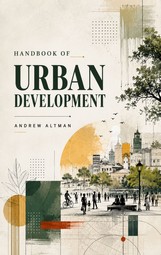
The Handbook of Urban Development is an essential guide for urban planners, real estate developers, and policymakers. It provides actionable methodologies and foundational principles for managing population growth, building sustainable infrastructure, and driving strategic, highvalue growth in modern cities. The book explores foundational and advanced concepts in urban planning and management across key areas. Establishes the core principles of creating inclusive, high-quality spaces that accommodate growing populations while enhancing overall quality of life. Analyzes the socioeconomic factors such as rural-to-urban migration, industrialization, and employment opportunities that catalyze the expansion of cities. Studies the spatial evolution of cities, covering radial growth, corridor development, and models to combat unsustainable urban sprawl. Breaks down the lifecycle of property investment, from initial site selection and market feasibility to zoning compliance and construction management. Highlights the design and integration of essential civic services, including water supply, sanitation, waste management, and power grids. Explores the integration of residential, commercial, and recreational spaces within close proximity to promote walkable, self-sustaining communities. Details how to center urban growth around high-capacity mass transit hubs to reduce carbon footprints and traffic congestion. Discusses cooperative financing and operational models that leverage private capital and expertise to execute massive public infrastructure projects. This book offers an introductory course in urbanism and provides an operations manual for architects, planners, developers, and public officials.
Preface
Chapter 1. Urban Development Overview
Urban Development Shapes Human Settlements
Public Sector Roles in Urban Development
Private Sector Development Industry Structure
Transit-Oriented Development Concentrates Growth
Master Planned Communities Coordinate Large-Scale Development
Zoning Reform Adapts Regulation to Contemporary Needs
Chapter 2. Urbanization Drivers
Economic Transformation Drives Urban Population Concentration
Globalization Integrates Cities into World Economy
Social and Cultural Factors Influence Urban Preferences
Informal Urbanization Accommodates Millions
Labor Market Dynamics Attract and Retain Workers
Demographic Transitions Accompany Urbanization
Chapter 3. Urban Growth Patterns
Fundamental Concepts of Urban Growth Patterns
Concentric Zone Model and Sector Theory
Transportation and Urban Growth Interactions
Environmental Constraints and Opportunities
Infrastructure Investment and Growth Patterns
Sustainable Development and Growth Patterns
International Perspectives on Urban Growth
Chapter 4. Real Estate Development Process
Real Estate Development Process in Urban Development
Due Diligence and Environmental Assessment
Leasing and Marketing of Completed Space
Affordable Housing Development
Real Estate Cycles and Market Timing
Real Estate Valuation and Appraisal
Real Estate Investment Trusts and Public Markets
Chapter 5. Infrastructure Development
Infrastructure Development and Urban Function
Transportation Infrastructure and Mobility Networks
Water Supply Systems and Source Development
Infrastructure Planning and Systems Integration
Infrastructure and Social Equity
Public-Private Partnerships in Infrastructure
Infrastructure and Quality of Life
Chapter 6. Mixed-Use Development Models
Historical Evolution of Mixed-Use Concepts
Economic Foundations of Mixed-Use Viability
Infrastructure Considerations for Mixed-Use
Community Engagement for Mixed-Use Projects
Large-Scale Master Planned Mixed-Use Communities
Mixed-Use and Historic Preservation
Mixed-Use and Public Safety
Mixed-Use and Climate Resilience
Mixed-Use and Place Identity
Mixed-Use and Real Estate Dynamics
Mixed-Use and Neighborhood Revitalization
Mixed-Use and Sustainable Transportation
Mixed-Use and Property Management
Mixed-Use and Social Infrastructure
Chapter 7. Transit-Oriented Development
Transit-Oriented Development Concentrates Growth around High-Quality Transit Stations
Half-Mile Radius Defines the Primary Transit-Oriented Development Catchment Area
Historic Preservation Integrates Old and New in Transit-Oriented Development
Chapter 8. Brownfield Redevelopment
Scope of Brownfield Sites in Urban Contexts
Brownfield Economic Development Incentives and Funding Sources
Brownfield Redevelopment for Affordable Housing Creation
Commercial and Industrial Reuse of Brownfield Properties
Innovative Financing Mechanisms for Brownfield Cleanup
Chapter 9. Greenfield Development Strategies
Historical Context of Greenfield Urban Expansion
Environmental Considerations in Greenfield Development
Transportation and Mobility Planning
Community Design and Placemaking Principles
Environmental Mitigation and Net Gain Approaches
Phasing and Absorption Strategies
Public Participation and Stakeholder Engagement
Transit-Oriented Development at Greenfield Sites
Open Space Networks and Green Infrastructure
Phased Development and Market Responsiveness
Infrastructure Financing Districts and Value Capture
Design Guidelines and Architectural Character
Environmental Impact Assessment and Mitigation
Chapter 10. Public-Private Partnerships
Fundamental Concept of Public-Private Partnerships in Urban Development
Legal and Contractual Frameworks for Partnerships
Equity Investment and Return Expectations
Dispute Resolution Mechanisms in Long Term Partnerships
Maintenance and Asset Preservation Obligations
Chapter 11. Financing Urban Projects
Financing Urban Projects Enables Community Development
Private Equity Funds Development Risk Capital
Community Development Financial Institutions Serve Underserved Markets
Community Reinvestment Act Drives Bank Investment
Mezzanine Finance Bridges Debt and Equity
Construction Financing Supports Building Process
Bridge Financing Spans Temporary Gaps
Mezzanine Finance Structures Intermediate Risk
Life Insurance Company Real Estate Investment
Real Estate Investment Trusts
Public Finance for Urban Infrastructure
Infrastructure Banks Leverage Public Funds
Chapter 12. Urban Density Management
Optimal Density Balances Benefits and Costs
Transfer of Development Rights Separates Density from Location
Density and Economic Productivity Connections
Density Bonuses Incentivize Public Benefits
Density and Community Participation
Chapter 13. Affordable Housing Development
Affordable Housing in Urban Contexts
Property Management and Resident Services
Zoning and Land Use Barriers to Affordability
Chapter 14. Commercial District Planning
Commercial District Typology and Characteristics
Urban Design and Placemaking in Commercial Districts
Business Mix and Tenant Recruitment
Main Street Approach to Commercial District Revitalization
Commercial District Resilience and Adaptation
Commercial District Planning in Small Communities
Chapter 15. Industrial Zone Development
Industrial Zone Development and Economic Function
Historical Evolution of Industrial Areas
Infrastructure Financing for Industrial Development
Industrial Zone Management and Governance
Security and Safety in Industrial Zones
Bibliography
Index