
Discover, explore and download thousands of ebooks across multiple subjects.

Discover, explore and download thousands of ebooks across multiple subjects.
ISBN : 9798904757557
Year : 2026 Price : $ 262.50
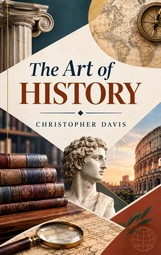
Christopher Davis is an acclaimed historian, academic, and author whose life’s work centers on breathing vivid vitality into the past. Known for his meticulous research and engaging, narrative-driven prose, Davis has spent over two decades bridging the gap between rigorous academic history and popular literature. The Art of History, serves as the culmination of his career, exploring how historical narratives are shaped, preserved, and transformed into a powerful lens for understanding the modern world. Davis’s profound authority on the subject is anchored by an exceptional academic background. He earned his Ph.D. in Modern History from Oxford University, where his doctoral dissertation on early European political structures received highest honors. Prior to his doctoral studies, he completed his Master of Arts in Historiography at Princeton University and graduated summa cum laude with a Bachelor of Arts in History and Classical Studies from Yale University. This extensive foundation across world-renowned institutions equipped him with a deep mastery of both archival research methodologies and the philosophical underpinnings of historical writing. Beyond his degrees, Davis is a respected voice in the global academic community. He currently serves as a Professor of History and Director of Historical Studies at the Institute for Advanced Historical Research, where he lectures on contemporary historiography and the evolution of cultural memory. He is a two-time recipient of the prestigious National Endowment for the Humanities (NEH) Fellowship and has been elected as a Fellow of the Royal Historical Society (FRHS) for his contributions to the field. His monographs and essays have appeared frequently in leading journals, including The American Historical Review and The Journal of Interdisciplinary History.
We live in an era of rapid change and digital noise, where context is often sacrificed for speed. The Art of History serves as an essential anchor. It is an intellectual tour de force designed for history enthusiasts, students, and any curious mind seeking to understand their place in the grand human timeline. This is more than a book about what happened; it is a profound exploration of why it matters, how it feels, and how we can use the canvas of yesterday to deliberately paint a better tomorrow. Beautifully written, meticulously researched, and deeply moving, it will challenge you to look at the world around you with entirely new eyes. History is not a static archive of dead facts; it is a living, breathing canvas painted by the choices, passions, and conflicts of humanity. In The Art of History, readers are invited on an intellectual and emotional journey that fundamentally redefines how we view the past. Moving far beyond the dry memorization of dates, battles, and treaties, this groundbreaking work treats history as the ultimate form of human expression. It argues that the narrative of our species is a masterfully woven tapestry one that requires not just scientific scrutiny, but artistic intuition to truly comprehend. At its heart, The Art of History explores the intersection between rigorous historical fact and the deeply human art of storytelling. The book posits that those who shaped our world statesmen, rebels, artists, and everyday citizens were creators navigating the chaotic canvas of their times. By shifting the lens from cold chronology to dynamic human drama, the book breathes life into forgotten eras, making the struggles of antiquity feel as urgent and raw as the morning news.
Preface
Chapter 1. Scope of Historical Writing
Foundational Duality: Art and Science in Dialogue
Emergence of Social History:
New Subjects and New Methods
Memory and History: A Complex Relationship
History of Emotions and the Senses
Oral History: Listening to the Past
Chapter 2. Historiographical Traditions
Classical Foundations Shape Early Historical Writing
Narrative Turn Refocuses on Historical Writing as Literary Art
Digital Historiography Transforms Research and Writing
Chapter 3. Sources and Evidence
Secondary Sources Interpret Evidence for Readers
Archival Silences Reflect Power Relations in Record Keeping
Historians Distinguish between Facts and Interpretations
Memory and History Interact in Complex Ways
Professional Standards Maintain Historical Rigor
Chapter 4. Narrative Techniques
Chronology as the Backbone of Historical Narrative
Dialogue and the Recreation of Past Voices
Climax and Resolution in Historical Storytelling
Chapter 5. Objectivity and Bias
Subjectivity Inherent in Historical Practice
Historian’s Positionality and its Effects
Interpretive Frameworks and Paradigm Shifts
Narrative Construction and Employment
Empathy and Imagination in Historical
Silences and Absences in Historical Record
Professional Ethics and Historical Integrity
Postmodern Challenges to Historical Objectivity
Teaching Historical Thinking and Bias Awareness
Ethics of Historical Representation
Global Perspectives on Historical Objectivity
Memory, Trauma, and Historical Representation
Future of Objectivity in Historical Practice
Chapter 6. Interpretation and Analysis
Historiographical Traditions and their Evolution
Narrative Construction and Historical Explanation
Historical Causation and Multifactorial Analysis
Comparative History and Cross-Cultural Analysis
Memory Studies and the Politics of the Past
Biography and the Problem of Representing Lives
Gender History and the Analysis of Power Relations
Ethics and Historical Interpretation
Chapter 7. Chronology and Causation
Development of Chronological Systems across Civilizations
Concept of Causation in Historical Thought
Role of Human Agency in Historical Causation
Comparative Analysis of Causal Theories in Historiography
Necessary and Sufficient Conditions in Historical Analysis
Structural Causation and Long-Term Historical Processes
Causation and Narrative Form in Historical Writing
Causation in Social History and History from Below
Causation and Historical Periodization
Causation and the Problem of Historical Objectivity
Causation in Comparative Historical Sociology
Future of Causation in Historical Studies
Chapter 8. Biography in History
Enduring Significance of Biographical Writing in Historical Discourse
Ancient Origins of Biographical Writing in Classical Civilizations
Renaissance Biography and the Revival of Classical Forms
Romantic Biography and the Celebration of Individual Genius
Social History and the Challenge to Traditional Biography
Postcolonial Biography and the Critique of Eurocentrism
Biographer’s Relationship to Subject: Empathy and Detachment
Literary Biography and the Question of Art and Life
Political Biography and the Exercise of Power
Visual Biography and Portraiture as Historical Evidence
Digital Biography and New Forms of Life Writing
Biography and the Problem of Historical Time
Biography as a Window into Material Culture
Chapter 9. Social and Cultural History
Emergence of Social History as a Discipline
Annales School and its Legacy
Chapter 10. Economic History Approaches
Emergence of Economic History as a Formal Discipline
Annales School and Structural Economic History
Cliometrics and the Quantitative Revolution
Institutional Turn in Economic History
Cultural Turn in Economic History
Global and Comparative Economic History
Problem of Economic Growth in Historical Perspective
Role of the State in Economic Development
Slavery and Colonial Extraction in Economic History
Technology and Innovation in Historical Perspective
Trade, Commerce, and Global Integration
Agriculture and Land Systems in Economic Development
Inequality in Historical Perspective
Post-World War II Golden Age
Environmental and Natural Resource History
Methodological Debates in Contemporary Economic History
Future of Economic History as a Discipline
Chapter 11. Political History Methods
Foundational Principles of Political History Inquiry
Sources and Evidence in Political Historical Research
Institutional History and the Analysis of Governing Structures
Conceptual History and the Analysis of Political Language
Political History and the Challenge of Periodization
Oral History and the Recovery of Political Experience
Archival Methods and the Practice of Political History
Interdisciplinary Borrowings and Political History Innovation
Narrative and Explanation in Political History Writing
Political History and Public Engagement
Chapter 12. Microhistory and Case Studies
Cheese and the Worms as Foundational Text
German History of Everyday Life
Narrowing the Lens: Scale as Methodological Choice
Exceptional Normal as Microhistorical Subject
Microhistory and the Problem of Representativeness
Material Culture and Microhistorical Evidence
Microhistory and Organizational Research
Evidential Paradigm in Historical Method
Chapter 13. Comparative History
Defining the Units of Comparison
Identifying Patterns and Causation
Role of Theory in Comparative Work
Historian’s Craft and Comparative Ethics
Chapter 14. Oral History Techniques
Interviewer Role and Responsibilities in Oral History
Legal and Ethical Frameworks Governing Oral History
Question Design and Interview Structure Techniques
Building Rapport and Trust with Narrators
Active Listening and Responsive Interviewing
Post-Interview Procedures and Documentation
Narrator Review and Release Procedures
Analyzing Oral History Testimony as Historical Evidence
Relationship between Memory and History
Oral History and Trauma: Sensitive Interviewing
Evaluating Quality and Significance in Oral History
Chapter 15. Visual and Material Sources
Oral Sources as Historical Evidence
Methodological Rigor in Oral History
Photography between Evidence and Construction
Objects as Carriers of Meaning
Material Sources in Social and Economic History
Oral Sources and Indigenous Histories
Material Sources and Everyday Life
Visual Sources and Historical Methods
Oral Sources and Social History
Oral Sources and Family History
Material Sources and Consumption History
Visual Sources and Cultural Encounter
Oral Sources and Generational Transmission
Material Sources and Historical Archaeology
Chapter 16. Digital History Tools
Digital History and Computational Methods
Text Mining and Computational Analysis of Historical Corpora
Network Analysis and Relational History
Computational Linguistics and Historical Language Processing
Computational Archival Science and Record Keeping
Data Visualization and Historical Argumentation
Digital History and Public Engagement
Ethical Dimensions of Digital History Practice
Chapter 17. Writing Style and Clarity
Historical Writing as a Literary Art
Medieval and Renaissance Historical Prose
Nineteenth Century and the Professionalization of History
Voice and Perspective in Historical Writing
Precision in Historical Language and Terminology
Use of Evidence and Quotation in Historical Prose
Challenges of Writing about Violence and Suffering
Influence of Social Theory on Historical Prose
Audience for Historical Writing
Regional and National Traditions of Historical Style
Chapter 18. Structuring Historical Arguments
Relationship between Thesis and Evidence in Historical Argumentation
Developing Historical Claims through Engagement with Scholarship
Chronology and Causation in Historical Argument Structure
Addressing Counterarguments and Alternative Interpretations
Use of Quantitative Evidence in Historical Argument
Comparative Frameworks in Historical Argument Structure
Argument Structure across Different Historical Genres
Developing Arguments through Chapter and Section Structure
Integrating Quotations Effectively into Historical Argument
Addressing Complexity without Losing Argumentative Clarity
Role of Audience in Shaping Historical Arguments
Ethics of Historical Argumentation
Chapter 19. Footnotes and Citations
Origins and Development of Scholarly Citation Practices
Digital Citation and the Transformation of Scholarly Reference
Citation Styles and Editorial Requirements
Intertextuality and Unspoken References
Bibliography
Index
