Discover, explore and download thousands of ebooks across multiple subjects.
ISBN : 9798904757625
Year : 2026 Price : $ 247.50
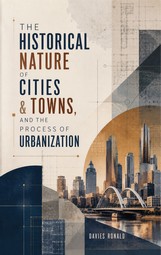
Davies Ronald's research primarily focuses on environmental inequality, urban socio-environmental disparities, and how historical city development shapes modern hazards like flooding and toxic waste accumulation. His work focuses on environmental sociology, urban political ecology, and the ways in which historical land-use patterns leave long-term (and often forgotten) ecological impacts on urban neighborhoods. Davies's book chapter/article explores how modern cities are not just demographic hubs but cumulative socio-environmental archives. The core premise of his work highlights that as cities expand, they build upon historical infrastructure and industrial practices. These past decisions physically shape modern landscapes, systematically concentrating environmental hazards (like toxic chemical sites) in marginalized, historically working-class urban areas. His book examines the structural, geometric, and economic patterns of cities from ancient settlements to modern industrial forms. He pioneered "New Regional Planning," which aimed to decentralize mega-cities to reduce pollution and traffic congest.
Understanding the historical nature of cities requires tracing 5,000 years of urban development. It explores how agricultural surpluses sparked the first settlements, and how successive eras from ancient defense needs to modern industrial shifts have continuously shaped the spatial, social, and economic structures of our environments. The Historical Nature of Cities serves as a comprehensive exploration of how human settlements evolved from rudimentary agrarian hubs into complex, interconnected global metropolises. The text details how geography, economics, politics, and culture physically shaped the urban landscape across millennia. Permanent settlements emerged 8,000-10,000 years ago during the Neolithic Revolution. Systematic farming allowed populations to produce excess food, sustaining non-farming specialists. The transition from tribal villages to early cities necessitated centralized administrative, military, and religious leadership to allocate resources. The first true urban civilizations flourished along fertile river basins. These include Mesopotamia (Tigris/Euphrates), Egypt (Nile), the Indus Valley, and Northern China (Yellow River). Civilizations like the Indus Valley (Mohenjo-daro and Harappa) introduced sophisticated gridiron street patterns, underground drainage systems, and public baths. Classical Greek city-states introduced democratic public spaces like the Agora, while the Roman Empire mastered large-scale municipal engineering, developing standardized colonial grid towns across Europe. Following the collapse of the Roman Empire, European urban life contracted. Towns re-emerged organically around defensive castles, monasteries, and market squares. Characterized by dense, high-walled perimeters, narrow winding streets designed to confuse invaders, and distinct quarters segregated by trade guilds. Moving away from medieval clutter, Renaissance architects viewed the city as a cohesive piece of art. Planning shifted toward symmetry, proportional design, and monumentalism. Introduction of radial street networks, expansive civic plazas, long perspective vistas, and star-shaped fortresses designed to withstand early artillery. The late 18th and 19th centuries witnessed an unprecedented influx of rural labor into factory towns. Factories took spatial priority, leaving working-class populations to live in overcrowded, poorly ventilated tenements. This created severe public health crises, including cholera outbreaks, which eventually sparked modern zoning laws and sanitary reform. European colonial powers imposed distinct spatial segregation in occupied territories.
Preface
1. Origins of Early Cities
Early Cities Emerged from Agricultural Surplus
Religious Institutions Organized Early Urban Life
Administrative Systems Managed Urban Complexity
2. Ancient Urban Civilizations
Mesopotamian City-States Established Urban Foundations
Greek City-States Created the Polis
Renaissance and Baroque Transformations
3. Medieval Town Development
Origins of Medieval Towns in Post-Roman Europe
Feudal Society and Urban Development
Urban Social Structure and Hierarchy
Urban Decline and Transformation in Late Middle Ages
4. Renaissance City Planning
Renaissance City Planning and the Transformation of Urban Form
Sforzinda and the Legacy of Ideal City Designs
Renaissance Cities and the Process of Urbanization
Renaissance Urbanism and the Rise of the Capital City
Renaissance Urbanism and the Experience of the City
5. Industrial Revolution Impact
Industrial Revolution and Urban Transformation Origins
Transportation Revolution and Urban Expansion
Industrial Suburbs and Company Towns
Transportation Technology and Urban Expansion
Urban Planning Responses to Industrial Conditions
Urban Cultural Institutions and High Society
6. Colonial Urban Patterns
Spanish Colonial Urbanism in the Americas
French Colonial Urbanism
Mining Centers and Resource Extraction Towns
Race, Class, and Colonial Urban Space
Decolonization and Urban Transformation
Colonial Urbanism and Indigenous Erasure
7. 19th Century Urban Growth
Industrialization Served as the Primary Engine of Nineteenth Century Urban Growth
Sanitary Conditions in Industrial Cities Reached Crisis Levels
Urban Planning Emerged as a Response to Industrial City Crises
Industrial Suburbs Developed Around Major Manufacturing Plants
Urban Machine Politics Emerged from Immigrant Voter Base
Urban Planning Education Emerged at Century’s End
8. Modernist Urban Visions
Philosophical Origins of Modernist Urban Thought
Le Corbusier and the Radiant City Concept
Modernist Housing Estates and Mass Housing Programs
Modernist Urban Visions in Non-Western Contexts
Modernist Urban Visions and the Critique of Expertise
Modernist Urbanism and the Public Realm Experience
9. Post-War Urban Expansion
Wartime Destruction and Reconstruction Imperatives
Suburbanization and the American Dream
Mass Production Housing and Construction Technologies
Environmental Awareness and Emerging Critique
Civil Rights and Urban Social Movements
Preservation and Heritage Conservation
International Diffusion of Urban Models
Environmental Legislation and Urban Impact
Housing Segregation and Fair Housing
Transportation Equity and Mobility Justice
10. Urbanization in Developing World
Origins of Urbanization in Developing Regions
Pre-Colonial Urban Systems and their Characteristics
Colonial Urban Impositions and Indigenous Responses
Post-Independence Urbanization Patterns
Rural to Urban Migration Dynamics
Political Dimensions of Urbanization
Financing Urban Development in Resource Constrained Contexts
Community Participation in Urban Development
Children and Youth in Urban Environments
Property Rights and Tenure Security Issues
Evictions and Displacement in Urban Development
City Branding and Competitive Positioning
Public Space and Urban Life Quality
Contemporary Urban Challenges in Context
11. Historical City Morphology
Historical City Morphology Studies Urban Form Evolution
Building Types Reflect Urban History
Historical Cartography Documents Urban Evolution
Urban Open Space Types and Evolution
12. Evolution of Urban Form
Organic Urban Form Emerged from Incremental Growth
Grid Planning Introduced Geometric Order
Linear Form Developed Along Transportation Routes
Street Patterns Structure Urban Movement
Transportation Technology Transformed Urban Form
Industrialization Reshaped Urban Morphology
Suburbanization Decentralized Metropolitan Areas
Urban Regeneration and Gentrification
13. Role of Trade in Urbanization
Trade as Fundamental Driver of Urban Origins
Prehistoric Trade Networks and Early Urban Centers
Silk Road Overland Trade and Caravan Cities
Medieval Trade Revival and Urban Growth
Marketplaces as Urban Nuclei
Trade, Money, and Urban Financial Institutions
Trade and Urban Political Power
Trade and Urban Decline
14. Religion and City Layout
Sacred Origins and the Founding of Cities
Temple as Urban Center
Islamic City: Mosque, Bazaar, and Residential Quarter
Chinese City: Temple, Altar, and Cosmic Order
Mesoamerican City: Temple-Pyramid, Plaza, and Cosmic Axis
Andean City: Temple, Oracle, and Sacred Landscape
Baroque City: Church, Square, and Theatrical Space
Pilgrimage City: Sacred Destination and Urban Form
Religion and Urban Conflict
15. Defensive Urban Structures
Prehistoric and Early Urban Defenses
Walled Cities of Asia and the Islamic World
Coastal Defenses and Port Cities
Fortified Bridges and River Defenses
City Walls as Civic Identity
Fortifications and Collective Memory
16. Industrial Towns History
Origins of Industrial Urbanization
Public Health Crises and Sanitary Reform
Industrial Suburbs and Commuting
Factory Architecture and Industrial Landscapes
Leisure and Recreation in Industrial Towns
Crime and Policing in Industrial Towns
Environmental Pollution and Industrial Urban Ecology
Industrial Towns and Environmental Justice
Industrial Towns and World Wars
Industrial Towns and Heritage Conservation
Industrial Towns and Urban Sustainability
Bibliography
Index