Discover, explore and download thousands of ebooks across multiple subjects.
ISBN : 9798904757670
Year : 2026 Price : $ 247.50
Daniel Wilson is a distinguished historian, historiographer, and academic whose lifelong dedication to understanding the mechanics of human memory has culminated in his latest definitive work, Theories of History. Known for his incisive analysis and ability to bridge the gap between abstract philosophy and concrete historical events, Dr. Wilson has spent more than two decades decoding how past narratives shape modern civilizations. Dr. Wilson’s academic foundation is rooted in world-class scholarship. He earned his Ph.D. in Historiography and Historical Theory from the University of Oxford, where his groundbreaking doctoral dissertation on the evolution of narrative structures in classical antiquities received the prestigious Leo Gershoy Award for outstanding historical literature. Prior to his doctoral studies, he completed his Master of Arts in Modern History at Princeton University, graduating summa cum laude, and received his Bachelor’s degree in Philosophy and History from the University of Edinburgh. This unique dual background in both philosophy and rigorous historical methodology provided him with the precise intellectual toolkit required to dissect centuries of historical thought. Currently serving as the Regius Professor of History at the Institute for Advanced Historical Studies, Dr. Wilson is a highly sought-after lecturer and public intellectual. His career spans numerous prestigious appointments, including tenured professorships and visiting scholar roles at the Sorbonne University in Paris and Harvard University. He is also a permanent fellow of the Royal Historical Society and a frequent contributor to leading academic journals, including the Journal of the History of Ideas and History and Theory. Beyond his extensive teaching career, Dr. Wilson has authored over four critically acclaimed books and dozens of peer-reviewed papers exploring cultural memory, political transitions, and the philosophy of time. His unique ability to synthesize complex theoretical frameworks—from Marxism and Postmodernism to Speculative Realism—into accessible, compelling prose has earned him a global readership.
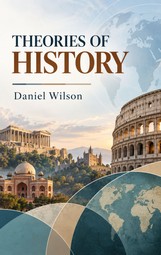
Theories of History is an intellectual exploration of how philosophers and historians across the centuries have interpreted the meaning, patterns, and direction of human existence. Rather than offering a standard chronological retelling of historical events, the book examines major philosophical frameworks—ranging from cyclical and providential views to Enlightenment progress, materialism, idealism, and postmodern critiques. It serves as a profound guide for readers seeking to understand the underlying philosophies that shape both historical analysis and modern societal movements. In a unique approach to historical representations, the central question of this book is 'what is history?' By describing 'history' through its supplementary function to the field of history, rather than the ground of a study, this collection considers new insights into historical thinking and historiography across the humanities. It fosters engagement from around the disciplines in historical thinking and, from that, invites historians and philosophers of history to see clearly the impact of their work outside of their own specific fields, and encourages deep reflection on the role of historical production in society. As such, Theories of History opens up for the first time a truly cross-disciplinary dialogue on history and is a unique intervention in the study of historical representation. Chapters in this volume discuss music history, linguistics, theater studies, paintings, film, archaeology and more. This book is essential reading for those interested in the practice and theories of history, philosophy, and the humanities more broadly. Readers of this volume are not only witness to, but also part of the creation of, radical new discourses in and ways of thinking about, doing and experiencing history.
Preface
Chapter 1. Introduction to Historical Theory
Defining Historical Theory as Field of Inquiry
Origins of Historical Consciousness in Western Thought
Marxist Theory of History
Chapter 2. Classical Views of History
Defining Classical Historical Consciousness
Thucydides and Scientific History
Tacitus and Imperial Critique
Xenophon and Personal History
Plutarch and Parallel Lives
Greek Historians of the Hellenistic Age
Historical Causation in Classical Thought
Biography and History
Chapter 3. Cyclical Theories of History
Chinese Dynastic Cycle Theory
Sorokin’s Cultural Fluctuation Theory
Ibn Khaldun’s Asabiyyah Cycle
Critiques of Cyclical Historical Theory
Cyclical Theory and Historical Periodization
Chapter 4. Linear and Progressive Models
Enlightenment Origins of Linear Historical Thought
Hegel and the Dialectics of World History
Victorian Confidence in Progress
Spengler and the Decline of the West
Challenge to Linear Models after World War I
Contemporary Pluralism in Historical Theory
Persistence of Progressive Models
Future of Historical Time
Chapter 5. Providential and Religious Interpretations
Foundations of Providential History
Bede and English Providential History
Islamic Views of History as Divine Revelation
Vico and Divine Providence in History
Marx and Materialist Historical Process
Herbert Butterfield and Christian Interpretation
Providential History and Indigenous Traditions
Chapter 6. Enlightenment Historical Thought
Defining Enlightenment Historical Thought
David Hume and Historical Skepticism
Giambattista Vico and Cyclical History
Scottish Enlightenment and Historical Sociology
Condorcet and History of Progress
Enlightenment and History of Arts and Sciences
Herder and Historical Particularism
Enlightenment Historical Thought and Revolution
Chapter 7. Romantic and Nationalist Theories
Emergence of Romantic Historical Thought
Nationalism and Historical Consciousness
Nationalist Historiography in Eastern Europe
Concept of Historicism
National Epics and Historical Consciousness
Nationalist Historiography and Political Mobilization
Nationalist Historiography and Ethnic Identity
Nationalist Historiography’s Legacy
Chapter 8. Positivism and Scientific History
Auguste Comte and the Law of Three Stages
Influence of Natural Science on Historical Method
Materialist Conception of History
Ideal of Objectivity
Whig Interpretation of History
Leopold von Ranke’s Complex Legacy
Annales School and Structural History
Challenge of Postmodernism
Chapter 9. Marxist Historical Materialism
Foundations of Historical Materialism
Dialectical Method and Historical Development
Class Struggle as Historical Motor
Commodity Fetishism and Capitalism
Crisis Theory and Capitalist Contradictions
Revolutionary Theory and Social Transformation
Marxism and Cultural Theory
Marxism and Ecology
Marxism and Religion
Marxism and Psychology
Chapter 10. Annales School and Longue Durée
Founding of the Annales Journal
Concept of Longue Durée
History of Mentalities
Annales and Quantitative History
Annales and Geography
Annales and Social History
Annales and Cultural History
Annales and Political History
International Reception of Annales
Chapter 11. Structuralism in History
Defining Structuralism as Intellectual Movement
Lévi-Strauss and Structural Anthropology
Althusser and Structural Marxism
Structuralism and Narrative History
Structuralism and Semiotics in Historical Analysis
Structuralism and Poststructuralist Critique
Structuralism and Interdisciplinarity
Chapter 12. Postmodern Challenges
Defining Postmodernism in Historical Context
Nietzsche and the Critique of Historical Truth
Lyotard and the Postmodern Condition
Baudrillard and the Hyperreal
Postcolonial Theory and Historical Critique
Linguistic Turn in Historical Studies
Ankersmit and Narrative Substance
Habermas and the Philosophical Discourse of Modernity
Postmodernism and Historical Practice Today
Chapter 13. Narrative Theory
Defining Narrative and Historical Writing
Aristotle’s Poetics and Narrative Foundations
Ricoeur’s Time and Narrative
Louis Mink and Narrative Form
Michel de Certeau and Historiographical Operation
Narrative and Historical Identity
Narrative and Historical Emplotment
Narrative and Environmental History
Chapter 14. Cultural Turn in History
History of Mentalities and Collective Representations
New Cultural History and its Program
Material Turn in Cultural History
Transnational and Global Turn in Cultural History
Critiques and Debates Surrounding the Cultural Turn
Future of Cultural History
Chapter 15. Gender and Feminist Theories
Emergence of Feminist Historical Consciousness
Concept of Patriarchy as Historical Force
Postcolonial Feminism and Decolonizing Gender
Gender, Religion, and Historical Change
Gender, Law, and Citizenship
Chapter 16. Postcolonial Historical Perspectives
Origins of Postcolonial Historical Thought
Subaltern Studies and History from Below
Postcolonialism and History of Resistance
Postcolonialism and History of Colonial State
Postcolonialism and History of Colonial Education
Postcolonialism and History of Colonial Cities
Postcolonialism and History of Nation Building
Postcolonialism and Historical Method
Chapter 17. Subaltern Studies
Emergence of Subaltern Studies as Historical Practice
Peasant Consciousness and Insurgency
Partha Chatterjee and Political Society
Gender Critique and Subaltern Studies
Subaltern Studies and Post-Colonial Theory
Partha Chatterjee on Nationalist Derivation
Subaltern and the Question of Representation
Gayatri Spivak’s Critique and Influence
Subaltern Studies Collective’s Evolution
Subaltern Studies and the Question of Method
Chapter 18. Memory Studies
Memory and History: Distinguishing Concepts
Politics of Memory and Commemoration
Digital Memory and New Technologies
Future of Memory Studies
Bibliography
Index