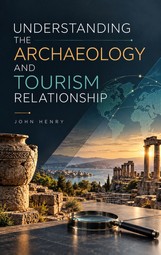
Discover, explore and download thousands of ebooks across multiple subjects.
ISBN : 9798904757717
Year : 2026 Price : $ 262.50
John Henry is a distinguished field archaeologist, cultural heritage consultant, and leading academic whose career has bridged the gap between raw, dirt-under-the-fingernails excavation and the multifaceted world of global tourism. With over two decades of experience navigating heritage sites across Europe, North Africa, and the Mediterranean, he has emerged as a crucial voice in modern heritage management. His pioneering work explores how ancient sites survive, adapt, and frequently transform under the weight of the global travel industry. John’s lifelong dedication to the past is driven by a simple but powerful philosophy: archaeology does not belong in a vacuum. Throughout his career, he has successfully demonstrated that an ancient site’s preservation relies entirely on how its story is told to the public. As an authority on sustainable heritage, he balances the scientific necessities of preservation with the economic and educational realities of public exposure. John Henry brings an unparalleled level of expertise, rigorous scholarship, and hands-on field authority to his landmark book, Understanding the Archaeology and Tourism Relationship. His foundational qualifications include: Ph.D. from a world-renowned institution, where his doctoral thesis focused extensively on the socio-economic impacts of mass tourism on fragile, unexcavated ruins. Beyond his academic titles, John is a veteran field director who has spearheaded critical conservation and excavation projects. His hands-on experience navigating the strict preservation standards of international bodies gives him a realistic view of how global tourism affects active research sites. He has served as a senior advisor to multi-national tourism boards, non-profit groups, and government agencies.
Understanding the Archaeology and Tourism Relationship is a groundbreaking and definitive exploration of the complex, often tense, and deeply vital intersection between the study of our human past and the global travel industry. This comprehensive volume serves as an essential bridge between two fields that are inextricably linked yet frequently operate with conflicting priorities. While archaeology seeks to preserve, document, and ethically interpret cultural heritage, tourism thrives on accessibility, public engagement, and economic monetization. This book dissects that delicate balance, offering readers a profound look at how the remnants of ancient civilizations are managed, marketed, and consumed in the modern world. The text navigates the multi-faceted dynamics of archaeological tourism or archaeotourism through a global lens, analyzing case studies from iconic UNESCO World Heritage sites to fragile, lesser-known local excavations. It goes beyond mere theoretical discourse to address the real-world friction between conservation and commercialization. What makes this work so powerful is its refusal to see tourism as a simple threat to archaeology. Instead, it positions tourism as one of archaeology’s most potent allies. When managed ethically, tourism generates the funding, political will, and public passion necessary to protect vulnerable history from looting, urban sprawl, and climate change. The book provides researchers, heritage managers, government policymakers, and travel industry leaders with a shared vocabulary and actionable strategies to transform conflict into collaboration. Ultimately, “Understanding the Archaeology and Tourism Relationship” is a masterclass in cultural stewardship. It challenges us to rethink how we interact with the past, ensuring that our desire to touch, see, and experience history today does not erase it for the generations of tomorrow.
Preface
Chapter 1. Defining the Archaeology-Tourism Nexus
Core Concepts: Archaeological Heritage and Cultural Tourism
Historical Emergence of Site Visitation Practices
Distinguishing Educational Tourism from Recreational Visits
The Role of Authenticity in Archaeological Experiences
Commodification and Its Effects on Heritage Value
Interdisciplinary Frameworks for Analysis
Chapter 2. Historical Evolution of Archaeological Tourism
Grand Tour Origins and Classical Site Pilgrimages
Nineteenth-Century Museum Development and Public Access
Early Excavations as Tourist Attractions
Post-War Mass Tourism and Archaeological Sites
UNESCO World Heritage Designation Impacts
Digital Age Transformation of Site Visitation
Chapter 3. Theoretical Foundations and Concepts
The Tourist Gaze Applied to Archaeological Settings
Authenticity Debates in Heritage Tourism Literature
Social Representation Theory and Site Narratives
Stakeholder Theory in Heritage Management
Sustainable Tourism Principles for Archaeology
Critical Heritage Studies Perspectives
Chapter 4. Stakeholder Identification and Engagement
Archaeologists as Interpreters and Gatekeepers
Local Communities and Traditional Custodians
Tourism Operators and Commercial Interests
Government Agencies and Regulatory Bodies
Visitors as Co-Producers of Heritage Meaning
Conflict Resolution Among Competing Stakeholders
Chapter 5. Visitor Motivations and Experiences
Typologies of Archaeological Tourists
Learning Outcomes from Site Visitation
Emotional and Affective Responses to Ruins
The Role of Guides and Interpretive Media
Visitor Satisfaction and Site Loyalty Factors
Measuring Educational Impact of Archaeological Tourism
Chapter 6. Site Interpretation and Presentation Strategies
On-Site Signage and Panel Design Principles
Guided Tours Versus Self-Guided Exploration
Reconstructions and Replicas: Ethical Considerations
Storytelling Techniques for Archaeological Narratives
Balancing Scientific Accuracy with Visitor Engagement
Chapter 7. Visitor Impact and Carrying Capacity Management
Physical Degradation of Archaeological Surfaces
Crowding and Visitor Experience Quality
Ecological Impacts on Site Surroundings
Visitor Monitoring Technologies and Counting Methods
Rotating Access and Seasonal Closure Strategies
Simulation Modeling for Sustainable Visitor Flow
Chapter 8. Conservation Ethics and Tourism Pressures
Preservation Principles in Archaeological Ethics
Tourism Development Versus In Situ Conservation
Preventive Conservation in High-Visitation Contexts
Emergency Response to Tourist-Induced Damage
Balancing Excavation Continuation with Public Access
Case Studies of Conservation-Tourism Conflicts
Chapter 9. Economic Dimensions of Archaeological Tourism
Direct Revenue Generation from Entrance Fees
Multiplier Effects on Local and Regional Economies
Employment Creation in Heritage Tourism Sectors
Funding Excavations and Site Maintenance via Tourism
Economic Leakage and Benefit Distribution Challenges
Cost-Benefit Analysis for Site Development Projects
Chapter 10. Community Engagement and Social Sustainability
Participatory Planning Models for Local Communities
Indigenous Rights and Co-Management Agreements
Heritage Education as Community Capacity Building
Benefit-Sharing Mechanisms and Livelihood Support
Addressing Displacement and Resettlement Issues
Social License to Operate in Archaeological Tourism
Chapter 11. Dark Archaeology Tourism and Sensitive Sites
Defining Dark Tourism in Archaeological Contexts
Mortuary Sites and Human Remains Presentation
Battlefields and Conflict Archaeology Visitation
Genocide and Atrocity Heritage Site Management
Ethical Guidelines for Dark Archaeological Tourism
Visitor Psychological Impacts and Support Measures
Chapter 12. Looting, Antiquities Trafficking, and Tourism
Tourist Demand as a Driver of Illicit Antiquities Trade
Souvenir Hunting and Small-Scale Site Looting
The Role of Tourists in Reporting Suspicious Activities
Legal Frameworks Against Heritage Trafficking
Public Awareness Campaigns for Ethical Souvenirs
Case Studies of Tourism-Linked Looting Incidents
Chapter 13. Digital Technologies in Archaeological Tourism
Virtual Reality Reconstructions of Excavated Sites
Augmented Reality Overlays for On-Site Interpretation
3D Modeling and Printing for Tactile Experiences
Mobile Applications and Self-Guided Audio Tours
Remote Sensing for Pre-Visit Digital Exploration
Evaluating Digital Technology Impact on Visitor Learning
Chapter 13. Policy, Governance, and Legal Frameworks
UNESCO World Heritage Convention Implementation
National Heritage Protection Laws and Tourism Clauses
International Charters on Archaeological Tourism
Zoning and Land Use Planning for Heritage Sites
Permitting Systems for Commercial Tourism Operations
Monitoring Compliance and Enforcement Mechanisms
Chapter 14. Directions and Emerging Challenges
Climate Change Impacts on Coastal Archaeological Sites
Overtourism Mitigation Strategies for Popular Sites
Post-Pandemic Recovery of Heritage Tourism Sector
Artificial Intelligence in Visitor Interpretation
Sustainable Funding Models Beyond Entrance Fees
Integrating Archaeological Tourism into Global Goals
Bibliography
Index