Discover, explore and download thousands of ebooks across multiple subjects.
ISBN : 9798904758004
Year : 2026 Price : $ 262.50
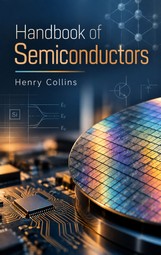
Henry Collins is a distinguished materials scientist and educator with over two decades of research excellence in solid-state physics and semiconductor engineering. He holds a Ph.D. in Materials Science and Engineering from the Massachusetts Institute of Technology (MIT), where his pioneering work on nanostructured semiconductors earned him international recognition. Dr. Collins currently serves as a Tenured Professor of Electrical Engineering and Director of the Advanced Electronic Materials Laboratory at a leading research university. Before transitioning to academia, he spent ten years as a Principal Semiconductor Physicist at a Fortune 500 microchip manufacturer, bridging the gap between theoretical physics and commercial hardware production. He has authored more than 50 peer-reviewed papers, holds twelve patents in semiconductor manufacturing processes, and regularly consults for global tech firms on next-generation silicon and wide-bandgap materials. In Handbook of Semiconductors, Dr. Collins distills his extensive academic insights and practical industry experience into a definitive, highly accessible guide for students, researchers, and field engineers alike. In the Handbook of Semiconductors, Henry Collins synthesizes his vast repository of knowledge into a definitive, single-source reference. Recognizing the rapid evolution of wide-bandgap materials, quantum dots, and 2D atomic crystals, Collins provides readers with a comprehensive guide that spans fundamental physics, device fabrication, and cutting-edge application architectures. His clear, mathematically rigorous, yet highly accessible writing style transforms complex device physics into actionable engineering insights, making this handbook an indispensable cornerstone for students, researchers, and industry professionals alike.
Handbook of Semiconductors stands as a definitive, masterfully curated compendium that bridges the foundational physics of solid-state electronics with the revolutionary, next-generation materials shaping the future of global technology. In an era where silicon limitations are pushing the boundaries of Moore’s Law, this extensive work serves as both a timeless reference manual and a forward-looking roadmap for scientists, hardware engineers, and advanced researchers pioneering the next wave of chip fabrication. The handbook begins by anchoring its readers in the absolute bedrock of semiconductor physics. Readers explore deep technical evaluations of electrical conductivity, band structures, and the critical thresholds that dictate how electrons manipulate information. Beyond pure theory, it details the harsh realities of physical manufacturing, giving engineers practical knowledge on how to achieve purity and structural perfection at the atomic level. The book delves deeply into emerging semiconducting materials, providing a crucial analytical look at alternate substrates that promise faster processing speeds and vastly improved thermal efficiencies. It demystifies the complex architecture behind modern microprocessors, tracking the lifecycle of chip manufacturing from raw chemical design to structural integration. Rather than presenting an idealized version of materials science, the text outlines the genuine technological roadblocks, defects, and scaling barriers that must be solved to realize next-generation consumer electronics and quantum computing architectures. Ultimately, this volume acts as a powerful intellectual engine. It empowers the minds that are actively scaling down node sizes, redesigning power grids, and fabricating the very microprocessors that run our modern world.
Preface
Chapter 1. Foundations of Advertising Communication and Market Influence
Advertising Origins Trace Ancient Commercial Practices
Media Planning Delivers Messages to Target Audiences
Integrated Marketing Communication Unifies Brand Messages
Political Advertising Shapes Electoral Outcomes
Advertising Education Prepares Future Practitioners
Product Placement Integrates Brands with Content
Professional Development Demands Continuous Learning
Chapter 2. Historical Evolution of Advertising Practices and Media
Ancient Advertising Forms and Market Communication
Department Store Advertising Revolution
Cable Television and Fragmentation
Programmatic Advertising Automation
Agency Model Evolution and Holding Companies
Advertising Resilience through Technological Change
Chapter 3. Advertising Theories, Models, and Consumer Persuasion
AIDA Model Guides Structured Consumer Persuasion
Means-End Chain Theory Links Product Attributes to Personal Values
Source Credibility Models Identify Effective Spokesperson Traits
Theory of Reasoned Action Predicts Behavioral Intentions
Information Processing Model Details Message Acceptance Steps
Sleeper Effect Explains Delayed Persuasion Impact
Mood Management Theory Explains Media Selection
Chapter 4. Global Advertising Systems and Industry Structure
Evolution of Global Advertising Systems
Global Advertising Expenditure Patterns
Agency Compensation Models and Industry Economics
Media Planning and Buying Functions
Television Advertising in Connected Environments
Radio and Audio Advertising Platforms
Advertising Research and Consumer Insights
Advertising Self-Regulation Mechanisms
Digital Privacy and Data Regulation Impact
Advertising Industry Associations and Networks
Business-to-Business Advertising Practices
Advertising and Artificial Intelligence Integration
Chapter 5. Advertising Research Methods and Market Intelligence
Foundations of Advertising Research and Market Intelligence
Experimental Design for Advertising Effectiveness Testing
Copy Testing Protocols and Standardization Efforts
Cross-Cultural Advertising Research Methods
Emerging Technologies in Advertising Research
Chapter 6. Consumer Behavior and Advertising Response Patterns
Introduction to Consumer Behavior in Advertising Contexts
Cognitive Response Patterns to Advertising Stimuli
Role of Emotion in Advertising Response Patterns
Involvement Levels and Consumer Processing Modes
Message Sidedness and Comparative Advertising Effects
Fear Appeals and Threat-Based Advertising Responses
Digital Advertising and Changed Consumer Response Patterns
Neuromarketing and Physiological Measures of Advertising Response
Advertising Repetition and Wearout Dynamics
Generational Differences in Advertising Response
Ethical Considerations in Advertising Response Research
Data Analysis Approaches in Advertising Response Research
Integration of Advertising with Broader Marketing Communications
Chapter 7. Strategic Planning and Campaign Development Processes
Foundational Role of Strategic Planning in Advertising
Market Analysis and Competitive Intelligence Gathering
Media Planning and Channel Strategy Development
Performance Measurement and Analytics Integration
Cultural Sensitivity in Global Campaign Development
Chapter 8. Brand Identity, Positioning, and Advertising Strategy
Brand Identity Fundamentals and Components
Brand Positioning Strategy Development
Advertising Strategy Development Process
Competitive Positioning Analysis
Creative Brief Development and Utilization
Media Planning and Buying Processes
Campaign Performance Measurement
Digital Transformation in Advertising
Chapter 9. Creative Concept Development and Message Design
Strategic Foundation of Advertising Creativity
Role of Consumer Psychology in Message Design
Visual Communication Principles in Advertising
Measuring Creative Effectiveness and Impact
Ethical Considerations in Message Design
Sound and Music in Advertising Message Design
Testing Creative Concepts with Target Audiences
Radio and Audio Advertising Techniques
Chapter 10. Copywriting Techniques for Effective Advertising Messages
Foundation of Persuasive Advertising Copywriting
Power of Storytelling in Modern Advertising
Writing Short-Form Copy for Social Media Platforms
Art of Writing Product Descriptions that Sell
Integrating Copy with Visual Design Elements
Building Long-Term Brand Loyalty through Copy
Chapter 11. Visual Design, Layout, and Art Direction in Advertising
Visual Communication Foundations Shape Advertising Impact
Imagery Selection Determines Advertising Impact
Digital Advertising Design Requires Format Adaptation
Web Design Integrates Advertising with User Experience
Chapter 12. Print Media Advertising and Editorial Integration
Foundations of Print Media Advertising
Newspaper Advertising Formats and Practices
Classified Advertising Economic Model
Technological Changes in Print Production
Print Advertising and Brand Building
Print Advertising Craft and Artistry
Chapter 13. Broadcast Advertising: Radio and Television Formats
Live Read Format Delivers Authenticity and Local Connection
:60 and :30 Second Spots Structure Radio Advertising Time
:15 and :10 Second Spots Respond to Clutter and Cost
Cross-Platform Campaign Extends Television Reach Digitally
Television Commercial Production Process Involves Complex Coordination
Chapter 14. Outdoor Advertising Systems and Public Space Messaging
Evolution of Outdoor Advertising Formats
Urban Planning and Outdoor Advertising Placement
Wall Murals as Advertising Medium
Outdoor Advertising and Public Space Aesthetics
Outdoor Advertising in Multicultural Markets
Outdoor Advertising in Developing Markets
Outdoor Advertising Measurement Evolution
Outdoor Advertising and Climate Adaptation
Chapter 15. Digital Advertising Platforms and Online Campaign Strategy
Foundations of Digital Advertising Platforms and Ecosystem
Search Advertising Platforms and Keyword Strategies
Programmatic Creative and Dynamic Content Optimization
Landing Page Optimization and Post-Click Experience
Bibliography
Index