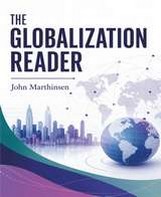
Discover, explore and download thousands of ebooks across multiple subjects.
ISBN : 9798904759827
Year : 2026 Price : $ 256.50
John Marthinsen is Professor of the Political Economy of Development at the London School of Economics. He is also Chair of the Decentralization Task Force at Columbia University's Initiative for Policy Dialogue. He works at the frontier between economics and political science, using quantitative and qualitative methods to investigate the institutions and organizational forms that underpin development transformations. He has published in the economics, political science, and development literatures, including Is Decentralization Good for Development? Perspectives from Academics and Policymakers (Oxford, 2015), and Governance from Below: Decentralization and Popular Democracy in Bolivia (Michigan), which won the W.J.M. Mackenzie Prize for best political science book of 2012. Professor Marthinsen's current work focuses on historical institutions, inequality and longterm, divergent development outcomes in Colombia and Latin America. More broadly, his fields include political economy, comparative politics, institutional economics, economic development and economic history. Before coming to the LSE he worked for the World Bank in La Paz, Bolivia on health, education, early childhood development and the environment. He trained in both politics and economics at Princeton, Harvard and the LSE, where his dissertation won the William Robson Memorial Prize.
Globalization refers to the processes by which more people across large distances become connected in more and different ways. They can become connected very simply by doing or experiencing the same sort of thing. For example, Japanese cuisine "globalizes" when more people on different continents enjoy the taste of sushi. Since the nineteenth century soccer has become globalized as players and fans in many countries took an interest in the game. Though many people lack access to good medicine, parents the world over routinely decide to immunize their children against major diseases. These are instances of diffusion: ways of thinking, acting, or feeling spread widely. Such diffusion increased greatly in recent decades as the infrastructure for communication and transportation improved dramatically, connecting groups, institutions, and countries in new ways. The spread of sushi involved not just a shared consumer experience; it also made many American fishermen dependent on a Japanese market as tuna caught off the US coast is sold and shipped overseas. In soccer, the professional prospects of great players from South America depend on the demand from European teams. The health of many children depends on breakthroughs in distant laboratories and an intricate global system for dispensing medication; at the same time, the movement of people around the globe also exposes people to new health risks. For good and ill, such links make more people more interdependent. These links are molded into new organizational forms as regional institutions go global or new ones take shape on the world stage. For example, international law governs who can fish in coastal waters, and the World Trade Organization handles disputes between members, including the United States and Japan.
Preface
1.
HISTORY OF THE GLOBAL ECONOMY..................................................1
1. 1 Two Economic Logics
1.2 Karl Marx and Class Contradictions
1.3 Imperialist Rivalry
1.4 Core-Periphery Contradictions
1.5 Re-Centralizing Power
1.6 Recentralization: Economic Consequences
1.7 Concluding Remarks
2.
GLOBAL SYSTEM THEORY......................................................................18
2.1 Marxism and Modernization Theory
2.2 Dependency Theory
2.3 World-System Theory
2.4 Current Global Systems Analysis
3.
EXPLAINING GLOBALIZATION............................................................35
3.1 Introduction
3.2 World-System Theory and Related Perspectives
3.3 World Polity Theory
3.4 World Culture Theory
4.
SOCIOLOGY OF THE GLOBAL SYSTEM..............................................39
4.1 The Conceptual Space for Transnational Practices (TNP)
4.2 Economic Transnational Practices
4.3 The Transnational Capitalist Class
4.4 Labour and the Transnational Capitalist Class
4.5 The Theory of the Global System: A Summary
5.
NEOLIBERALISM.......................................................................................47
5.1 The Moving Map of Neoliberalization
6.
THE PROBLEM OF GLOBALIZATION ..................................................53
6.1 The Crystallization of a Concept and a Problem
6.2 Coming to Terms with the World as a Whole
6.3 Globalization and the Search for Fundamentals
6.4 Universalism and Particularism Globalized
6.5 Disjuncture and Difference in the Global Cultural Economy
7.
THE ELUSIVE CONCEPT OF GLOBALISATION.................................72
7.1 Globalisation: The Analytical Tool
7.2 Globalisation: The Political Agenda
7.3 Globalisation as Humanitarian Concern
7.4 The Moral Challenge
8.
GLOBALISM’S DISCONTENTS...............................................................80
8.1 Beneficial Globalization
8.2 The Darker Side of Globalization
8.3 Lessons of Crisis
8.4 The Costs of Volatility
8.5 The Governance of Globalization
8.6 Global Social Justice
9.
THE MODERN WORLD-SYSTEM AS A
CAPITALIST WORLD-ECONOMY .........................................................89
9.1 Waves of Globalization Frank
9.2 Some Patterns in the First Wave
9.3 The Second Wave of Globalization: North Dakota
9.4 Some Patterns in the Second Wave
10.
GLOBAL INCOME INEQUALITY BY THE NUMBERS.......................104
10.1 The Bottom Billion
10.2 Traps, and the Countries Caught in Them
10.3 The Role of Growth in Development
11.
THE GLOBAL FINANCIAL CRISIS AND ITS EFFECTS ...................115
11.1 A Brief Chronology
11.2 Underlying Causes
11.3 The Initial Economic Impact
11.4 Policy Responses
11.5 The Twin Excesses – Financialization and Globalization – Caused the Crash
12.
THE INTERNATIONAL MONETARY FUND.......................................125
12.1 The Effects of IMF Programs on the Balance of Payments
12.2 Economic Growth
12.3 Income Distribution and Social Spending
12.4 ISO and the Infrastructure for a Global Market
12.5 The ISO Network and Its Voluntary Consensus Process
12.6 A Standard and Its Consequences
12.7 Setting the Standard
12.8 Global Health Governance
12.9 The Bill & Melinda Gates Foundation’s Grant-Making
Programme for Global Health
13.
POVERTY CAPITAL:
MICROFINANCE AND THE MAKING OF DEVELOPMENT.............151
13.1 Fall from Grace?
13.2 Homegrown Institutions
13.3 Poverty Truths
13.4 The Conditions of Protection
13.5 World Culture in the World Polity
13.6 World citizenship
13.7 Closing the Corruption Casino
13.8 Trading Diamonds Responsibly
13.9 Translating Norms into Practice: The Kimberley Process
14.
ANALYZING GLOBALISM.....................................................................177
14.1 Global Interdependences and Movements
14.2 Are the Poor Getting Poorer?
14.3 Global Justice and the Bargaining Problem
14.4 Altering Global Arrangements
14.5 Institutions and Inequality
15.
TOWARD DEMOCRATIC GOVERNANCE FOR SUSTAINABLE DEVELOPMENT.......................................................................................184
15.1 The Rise of Domestic Opposition
15.2 The Building of Transnational Linkages
15.3 Taking on the World Bank
15.4 The Genesis of the World Commission on Dams
15.5 Ozone Depletion
16.
ASSUMPTIONS OF AN
ALTER-GLOBALISATION STRATEGY ................................................197
17.
THE GLOBAL SOUTH:
THE WTO AND DEGLOBALIZATION ................................................204
17.1 How would you summarize your own critique of the WTO?
17.2 What would you propose as a positive alternative to the WTO regime?
17.3 What would deglobalization mean for finance?
17.4 Land reform?
17.5 Ecological Balance in an Era of Globalization
17.6 The Three Waves of Globalization
17.7 Northern Dumping in the South
17.8 People’s Movements for the Protection of Biodiversity and Collective Rights
17.9 The Movement for Declaration of Community Rights to Biodiversity: The Case of Pattuvam Panchayat
17.10 Conclusion
18.
GLOBALIZATION AND THE WORLD ECONOMY............................218
18.1 Introduction
18.2 China Makes, the World Takes
18.3 Commodity Chains and Marketing Strategies
18.4 Nike Corporation: Competition, Upgrading, and
Innovationin a Commodity Chain
18.5 The Sticky Superpower
18.6 Power through Neglect
19.
GLOBALIZATION AND THE NATION STATE....................................245
19.1 Introduction
19.2 The Declining Authority of States
19.3 The Neglected Factor – Technology
19.4 Politics, Power and Legitimacy
19.5 Global Organized Crime
19.6 Criminalization and the Rise of the State as a Courtesan
19.7 Has Globalization Gone Too Far?
19.8 The Individualization of Society
19.9 Linkages to World Society
19.10 Abortion Liberalization in World Society
Bibliography...............................................................................................283
Index...........................................................................................................309